What is a no-prep veneer?
A no-prep veneer ("prepless") is a thin layer of ceramic bonded to the visible surface of a tooth without removing any enamel. A minimal-prep veneer needs a very slight reduction, confined to the enamel, of a few tenths of a millimetre. In both cases the goal is the same: to change the shape, length or shade of a tooth while preserving as much natural structure as possible.
These veneers work best when volume needs to be added (small teeth, gaps, worn edges) and much less well when volume needs to be reduced or strong discolouration masked. That is the rule to remember above all: a no-prep veneer always adds thickness to the tooth.
If you are still weighing veneers against crowns, our article on veneers or crowns compares the two approaches. Here we focus on the most conservative form of veneer.
Good candidates: when an additive approach makes sense
A no-prep or minimal-prep veneer is often an option in the following situations:
- small or narrow teeth, such as peg-shaped lateral incisors;
- gaps between teeth (diastemas) that you would like closed;
- worn or shortened edges from abrasion, where length needs restoring;
- teeth set slightly back from the arch, which can be brought forward visually;
- minor shape irregularities or small enamel chips;
- a slight change of shade, when the tooth is not heavily discoloured.
What they have in common: the tooth has room to take on extra volume without the result looking bulky. That is exactly what is checked before committing, through the aesthetic plan and the trial in the mouth.
Other conditions matter too. First, tooth position can be corrected beforehand: light orthodontic alignment sometimes turns a tooth that sits too far forward into a good candidate, because it creates room for the veneer. This combined treatment takes longer but is far more conservative. Second, the gum level should be stable: in teenagers and young adults it can still change, revealing the veneer margin a few years later. Finally, motivation counts: a no-prep veneer does not make up for poor hygiene or harmful habits; it needs regular care.
When it is not the right solution
Being honest about the limits prevents disappointment. A no-prep approach is usually not recommended, or not enough on its own, when:
- teeth are already forward or bulky: adding thickness would exaggerate the problem and make the smile look oversized;
- teeth are crowded: prior alignment, for example with clear aligners, is often needed to create space;
- dark discolouration must be masked (a greyed root-filled tooth, tetracycline staining): very thin ceramic does not always hide a dark background;
- the tooth has large fillings or has lost a lot of enamel: bonding is less reliable on exposed dentine;
- you have uncontrolled bruxism, which puts ceramic at risk of fracture;
- active gum disease has not been treated.
In these cases other options should be discussed: slightly more preparation, orthodontic alignment first, whitening, composite veneers or a crown. Sometimes the best decision is to do nothing at all.
The steps, from simulation to bonding
Most of the work happens before the veneers are made.
- Consultation and assessment: examination of teeth, gums and bite, with photographs and X-rays if needed.
- Aesthetic plan: analysis of the face and smile, possibly through digital smile design, followed by a wax or digital model of the proposed shape.
- Mock-up: a temporary resin is applied over your teeth so you can see the result in your mouth. This is the decisive step for no-prep veneers: it shows whether the added volume still looks natural and lets length and shape be adjusted. Our article on digital smile design and mock-ups explains this test.
- Preparation if needed: none, or very light polishing of the enamel to define the margins.
- Impression: conventional or with an intraoral scanner.
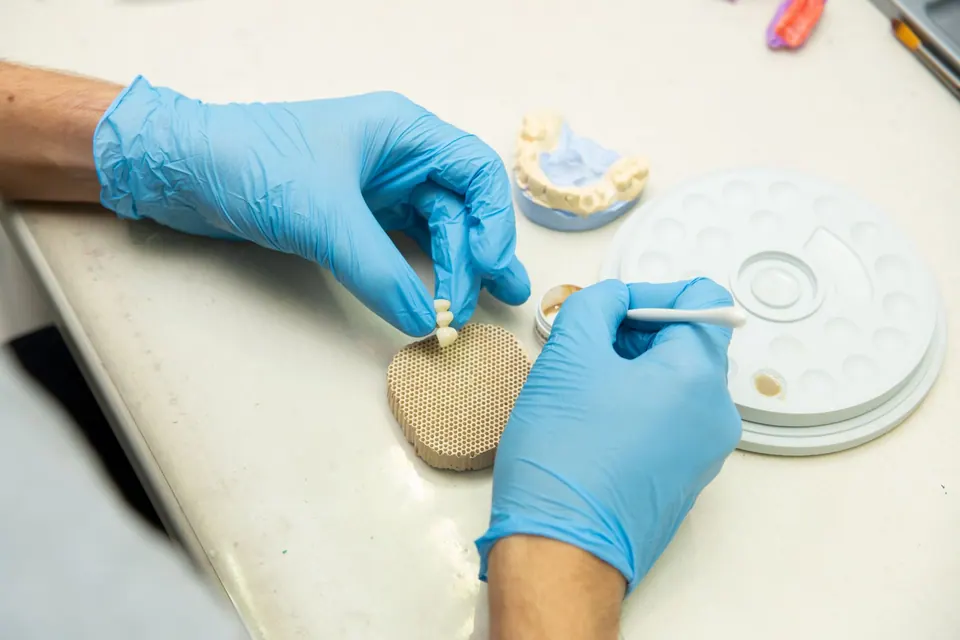
- Fabrication: very thin ceramic, usually feldspathic or lithium disilicate, made by the laboratory.
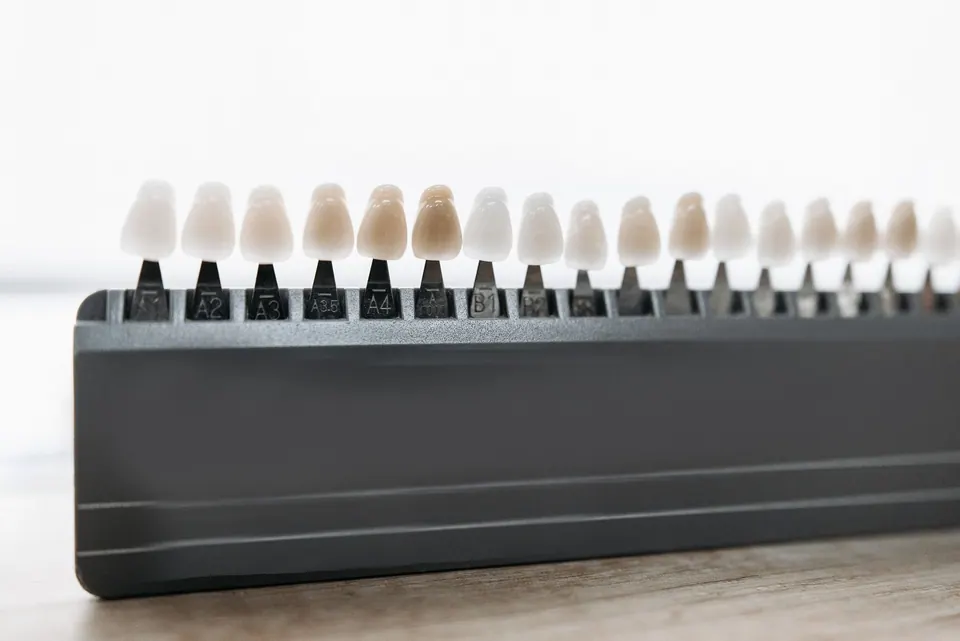
- Try-in and bonding: shade check with try-in pastes, then bonding under strict isolation, since enamel gives the best adhesion.
- Finishing: polishing of the margins, bite adjustment and, if needed, a protective night guard.
Advantages and limits, without exaggeration
Advantages:
- enamel is preserved, and enamel does not grow back;
- often no anaesthetic, since the tooth is not drilled;
- bonding to enamel, the most reliable situation in adhesive dentistry;
- in most cases, no temporaries.
Limits:
- risk of over-contouring: if poorly planned, the veneer can make the tooth look thick, or leave a ledge at the gumline that traps plaque;
- limited shade control on discoloured teeth;
- a margin that may show if the edge is not well blended;
- high technical demand: ceramic this thin is fragile before bonding and requires an experienced laboratory and clinician.
You will often hear that these veneers are "reversible". That is only partly true: the tooth has not been cut, but removing a bonded veneer usually leaves marks on the enamel. It is wiser to think of the treatment as long-term and carefully considered.
Longevity: what does it depend on?
No lifespan can be guaranteed, but several factors clearly influence how well a no-prep veneer holds up over time:
- the amount of enamel available for bonding;
- the bite: uneven contacts or restricted jaw movements put stress on the edges;
- bruxism and habits (nail biting, opening packaging with your teeth);
- the quality of the margins and how well they fit the gum;
- hygiene and regular check-ups.
Day to day, a veneer is cared for like a tooth: gentle brushing, floss or interdental brushes and regular professional cleaning. Highly abrasive toothpastes can dull the glaze over time. If a veneer chips, a local repair is sometimes possible; otherwise it is remade.
Having your smile assessed in Rabat
Before asking for no-prep veneers, consider these questions: do my teeth have room for extra volume? Do I genuinely like the mock-up, from the front and in profile? Should my teeth be aligned first? What happens if a veneer fractures?
At German Dental Clinic in Agdal, planning dental veneers starts with an examination, photographs and a simulation, to show you what can be achieved with or without preparation. If you live in or around Rabat and are thinking about veneers, book an appointment to discuss it based on your own smile.
Frequently asked questions
Are no-prep veneers painful?
Generally not. Because the enamel is not drilled, or only very lightly polished, an anaesthetic is often unnecessary. Bonding can cause temporary sensitivity in some people. In the days that follow, the main thing is getting used to the new shape of your teeth, particularly when pronouncing certain sounds.
Can no-prep veneers be removed later?
Technically yes, but not without consequences. Because the veneer is firmly bonded to the enamel, it has to be ground away, which usually leaves marks that need polishing or a new restoration. It is best to regard the treatment as long-term, even though it preserves the tooth far better than a conventional veneer.
Do no-prep veneers make teeth look bulky?
They always add some volume, which is why case selection matters so much. On small, spaced or set-back teeth, that volume is an advantage. On teeth that are already forward, the result can look thick. A mock-up in the mouth lets you judge before anything is made.
Should I whiten my teeth before getting veneers?
This is often advised when only some teeth will receive veneers. The whole smile is whitened first, then the veneer shade is chosen once the colour has settled, for a consistent result. Ceramic does not respond to whitening: its shade is fixed when it is made.
How do they differ from composite veneers?
Composite veneers are sculpted directly on the tooth, often without preparation, in a single visit. They are easier to touch up but age faster (wear, staining, loss of shine). Ceramic is more stable over time and closer to natural enamel, but requires a laboratory and several appointments.
The information on this page is general. Only a consultation allows a diagnosis and a suitable treatment plan.