What is PRF?
PRF (Platelet-Rich Fibrin) is a platelet concentrate prepared from a small amount of your own blood. After centrifugation, a fibrin clot is obtained that concentrates platelets and white blood cells. Placed in a surgical wound, it acts as a natural scaffold for healing and gradually releases growth factors.
In oral surgery, these concentrates are used as an adjunct in certain procedures: extractions, bone grafts and gum surgery. They do not replace good surgical technique, nor a graft material when the aim is to rebuild a volume of bone.
This article explains how they are prepared, when they are offered, what studies show in plain words, and which questions to ask if your dentist mentions them. It is general information: only your dentist can tell you whether this technique is indicated in your case.
How a platelet concentrate is prepared
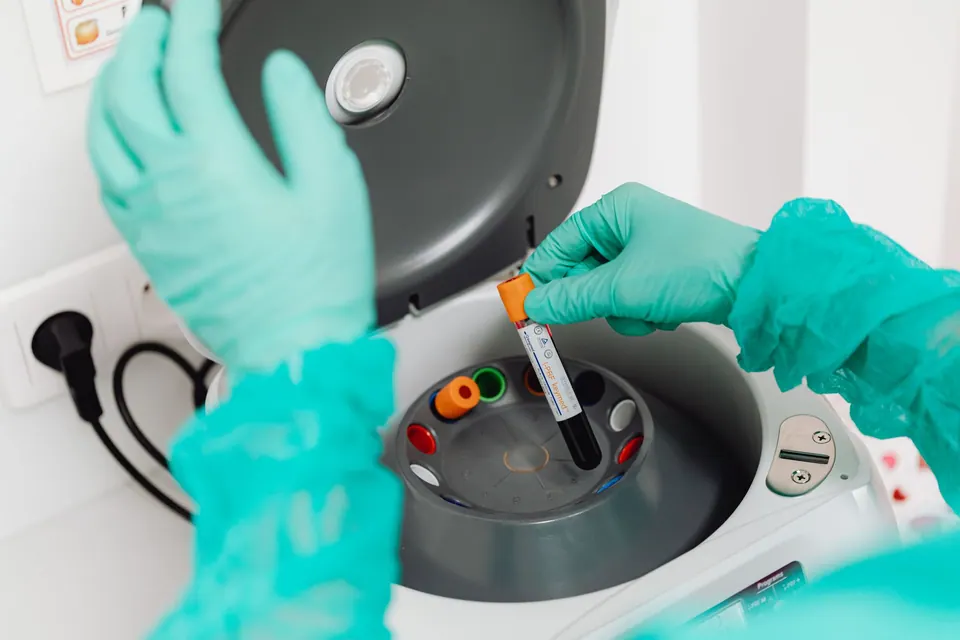
Preparation takes place on the day of the procedure, in a few steps:
- a blood sample from the inside of the elbow, similar to one taken for a laboratory test, in dedicated tubes;
- centrifugation for a few minutes, which separates the blood into layers: red cells at the bottom, the fibrin clot in the middle and a cell-poor plasma on top;
- collection of the clot, which can be pressed into thin membranes, cut into plugs or mixed with a bone substitute to form an easier-to-handle paste.
There are several families of concentrates:
- PRP (platelet-rich plasma), the so-called first generation, prepared with an anticoagulant and activating agents;
- PRF, the second generation, obtained without anticoagulant or additives, making it a product derived entirely from the patient;
- variants of PRF (L-PRF, A-PRF, liquid i-PRF, CGF), which differ in centrifugation speed and time or tube type.
These protocol differences change the composition of the final product, which is one reason why studies are sometimes hard to compare.
When are they used?
Some dentists offer platelet concentrates in a range of situations:
- after an extraction, especially of an impacted wisdom tooth, to fill the socket and support soft tissue healing;
- during socket preservation, alone or combined with a bone substitute;
- in bone grafts, mixed with the graft material to make it easier to place, or used as a covering membrane;
- during a sinus lift, for example to protect the sinus membrane;
- in periodontal and gum surgery, as an adjunct in treating certain bone defects around teeth or gum recession;
- in patients whose healing is more fragile, within specific protocols decided case by case.
In each of these situations the concentrate remains an adjunct. The outcome depends above all on the diagnosis, the surgical technique, the quality of the bone and gum, and following instructions after the procedure.
What the studies say, in plain words
Platelet concentrates have been the subject of many publications and several systematic reviews. Conclusions vary by indication:
- For soft tissue healing and comfort after extraction, particularly of wisdom teeth, several reviews report a favourable trend: less pain and swelling in some studies, and sometimes fewer cases of dry socket (painful inflammation of the socket). Results are not consistent, however.
- In periodontics, combined with surgical treatment of certain bone defects, PRF has shown a benefit in clinical studies compared with the same treatment without it.
- To rebuild bone volume (grafting, sinus lift), PRF on its own does not replace a graft material. Mixed with a substitute it makes handling easier, but additional bone gain has not been consistently demonstrated.
In short, the evidence is encouraging for some indications and limited or conflicting for others, and the wide variety of protocols makes comparison difficult. Professional bodies regard it as a possible adjunct, not a treatment in itself. Be wary of promises of miraculous healing: no concentrate makes up for continuing to smoke or neglecting oral hygiene.
Safety, limits and contraindications
The main strength of PRF is that it is autologous: it comes from your own blood, without additives, which rules out risks of rejection or transmission linked to the product itself. The drawbacks are mostly practical:
- an additional blood sample, which may leave a small bruise on the arm or make sensitive people feel faint;
- preparation time that slightly lengthens the procedure;
- dedicated equipment and strictly sterile handling;
- a product that resorbs quickly, within days to a few weeks, so it cannot maintain space on its own.
Some situations reduce its value or require medical advice: clotting disorders, a low platelet count, blood diseases, or certain anticoagulant and antiplatelet medicines, which can affect clot formation. Always mention your medicines and medical history at the assessment. There is no obligation to use a platelet concentrate: many procedures heal very well without one.
PRF, bone grafting and socket preservation: complementary roles
A common misunderstanding is to see PRF as an alternative to grafting. In reality the two play different roles:
- graft material (the patient's own bone, or a substitute of animal, human or synthetic origin) acts as a framework: it holds a volume and guides new bone formation over several months;
- the platelet concentrate acts more as a biological support for healing, especially in the first days, both for soft tissues and at the interface with the graft.
This is why, when the goal is enough bone for an implant, the strategy rests first on choosing the right technique: a bone graft, guided bone regeneration or socket preservation at the time of extraction. The concentrate can be added if the dentist considers it beneficial.
Likewise, for a straightforward tooth extraction in a healthy person, natural healing of the blood clot is sufficient in the vast majority of cases, provided instructions are followed. Our article on wisdom teeth describes the usual recovery.
Questions to ask and the assessment in Agdal
If a platelet concentrate is offered to you, a few questions help you make an informed decision:
- Which type of concentrate will be used, and for what specific purpose in my procedure?
- What does it add in my case compared with the same surgery without it?
- Do my medicines or medical history set any limits?
- Is it an optional extra, and what is the alternative?
At German Dental Clinic in Agdal, oral surgery, complex extractions, bone grafts and bone preservation are among the treatments offered. During the assessment, based on a clinical examination and digital X-rays, the dentist explains the proposed technique and which adjuncts might or might not be useful in your situation, without making promises. If you live in Rabat and are preparing for an extraction or a graft, you can book an appointment to talk it through.
Frequently asked questions
Is PRF made from my own blood?
Yes. A small blood sample is taken from your arm on the day of the procedure, then centrifuged for a few minutes. The resulting fibrin clot is used directly in the surgical area. Because its classic form contains no additives, it comes entirely from your own body, which rules out rejection reactions linked to the product.
Can PRF replace a bone graft?
No. PRF resorbs quickly and cannot maintain a volume on its own. When the aim is to rebuild bone for an implant, a graft material is still needed. The concentrate may be mixed with that material or used as a covering, as an adjunct, if your dentist feels it is useful in your situation.
Does PRF reduce pain after wisdom tooth removal?
Several studies suggest less pain and swelling, and sometimes fewer cases of dry socket, after wisdom tooth extraction, but results differ from one study to another. Following aftercare instructions, taking the prescribed medicines and a gentle extraction technique remain the main factors in your comfort after the procedure.
Are there risks in using PRF?
The product itself, made from your blood, carries very little risk. The drawbacks relate mainly to the blood sample: a small bruise on the arm or brief faintness in sensitive people. Certain blood diseases or anticoagulant medicines can affect the quality of the clot, which is why you should mention your medicines at the assessment.
Is PRF essential for good healing?
No. The vast majority of extractions and many surgical procedures heal very well thanks to the natural blood clot, provided instructions are followed and smoking is avoided. A platelet concentrate is an optional adjunct offered for certain indications. Your dentist will tell you whether it has real value in your case.
The information on this page is general. Only a consultation allows a diagnosis and a suitable treatment plan.