What is a dental abscess?
A dental abscess is a collection of pus caused by a bacterial infection, forming at the tip of a tooth root, in the gum or around a wisdom tooth. It usually shows up as throbbing pain, a swollen gum or cheek and sometimes fever. It does not go away on its own: the source of the infection must be removed, generally through treatment of the tooth, drainage or extraction.
Pus is the result of the battle between bacteria and the body's defences. When it cannot drain, pressure builds up, which explains why the pain can be so intense. If it finds a way out through the bone and gum, the pain may suddenly ease: this does not mean the infection has healed, only that it has found an exit.
Taking an abscess seriously means preventing it from spreading to neighbouring tissues and keeping the best chance of saving the tooth.
The three main types of abscess
There are three main forms, depending on where the infection started:
- Periapical abscess: the most common. It starts inside the tooth. Deep decay, a fracture or an old injury has let bacteria reach the pulp (the "nerve"), which dies and becomes infected. The infection then leaves through the root tip into the bone.
- Periodontal abscess: it develops in a gum pocket between the tooth and the bone, in someone with gum disease. The tooth may still be alive.
- Pericoronal abscess: it forms around a tooth that is not erupting properly, typically a lower wisdom tooth partly covered by gum, under which food debris and bacteria build up.
This distinction is not a detail: it determines the treatment. A periapical abscess is treated by cleaning the inside of the tooth, a periodontal abscess by cleaning the pocket, and a pericoronal abscess often by removing the wisdom tooth involved. Only an examination with an X-ray can tell them apart.
Symptoms: how to recognise an abscess
Signs vary with the type and stage of the infection, but some come up often:
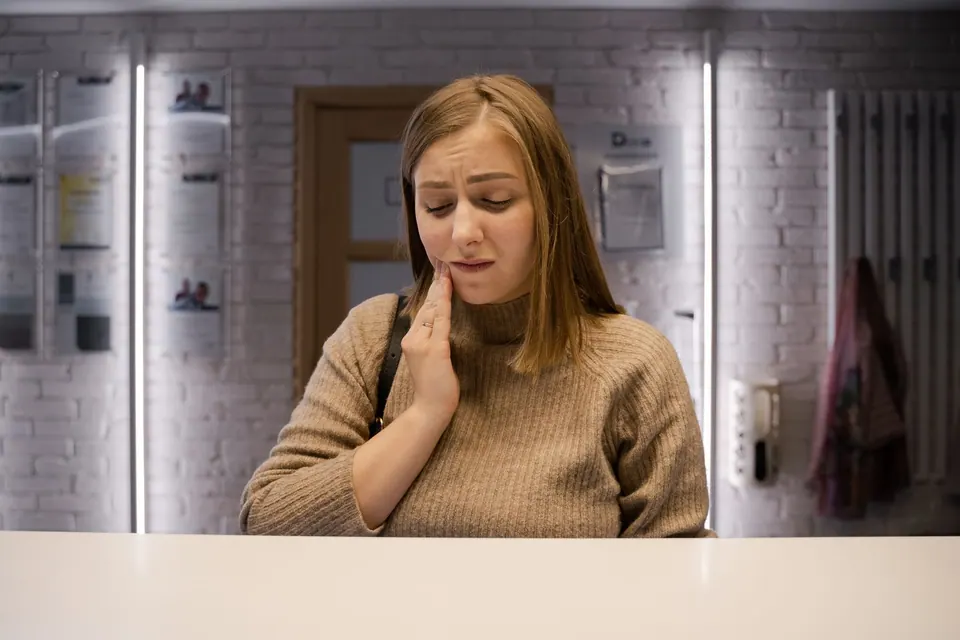
- a throbbing pain that beats with your pulse, sometimes spreading to the ear, temple or jaw;
- pain that is clearly worse when you bite or tap the tooth;
- a feeling that the tooth has become longer or slightly loose;
- swelling of the gum, cheek, lip or under the jaw;
- a small boil on the gum that releases fluid with an unpleasant taste;
- bad breath or a taste of pus;
- tender glands under the jaw, fever or unusual tiredness.
Note that a tooth that was very painful with hot and cold, then stops reacting altogether, has not necessarily healed. It can be a sign that the nerve has died and the infection is progressing silently. If you have toothache without swelling, our article toothache: what to do will help you decide on the next step.
When is it an emergency?
Most abscesses should be seen promptly, within the next few days. Some signs, however, call for an appointment the same day, and sometimes a visit to a hospital emergency department:
- swelling that spreads quickly towards the eye, temple, neck or under the tongue;
- difficulty opening your mouth, swallowing or breathing;
- high fever, chills or feeling generally unwell;
- hard, hot swelling under the jaw or in the neck;
- infection in a vulnerable person: poorly controlled diabetes, immunosuppressive treatment, chemotherapy, pregnancy, or certain heart valve replacements.
In these situations the infection can spread into the tissues of the face and neck (known as facial cellulitis of dental origin). This is a serious complication that needs immediate treatment. Difficulty breathing or swallowing means calling emergency services or going straight to the emergency department.
For urgent cases without signs of general illness, our dental emergency in Rabat page explains how to be seen quickly.
Why antibiotics alone are not enough
It is a widespread belief that an abscess is cured with antibiotics. In reality, antibiotics travel in the bloodstream and do not reach the inside of a tooth whose nerve has died, nor pus trapped in a pocket with no blood supply. They may calm the infection for a few days, but the source remains, and the abscess returns sooner or later, sometimes worse.
International guidance, including that of the American Dental Association, reserves antibiotics for situations where the infection is spreading or comes with general signs (fever, malaise, swollen glands), and for certain vulnerable patients. Even then, they support the dental treatment rather than replace it.
A few habits to avoid:
- taking the leftovers of an old course of antibiotics;
- stopping a prescribed course as soon as the pain eases, without advice;
- postponing your appointment because "it feels better".
Unnecessary antibiotic use also encourages bacterial resistance, making future infections harder to treat, for you and for others.
Treatment: drain first, then treat the cause
Treating an abscess has two goals: draining the pus to relieve pain, then removing the cause to prevent it coming back.
Drainage can be done in two ways. Either by opening the tooth to reach the canals, which often lets the pus escape and relieves pressure, or through a small incision in the gum under local anaesthetic when the collection is well defined.
After that, treatment depends on the type of abscess and the condition of the tooth:
- Savable tooth, periapical abscess: root canal treatment cleans and disinfects the inside of the canals before sealing them, then the tooth is rebuilt and protected. If the tooth had already been root-filled, this is called retreatment.
- Periodontal abscess: thorough cleaning of the pocket under anaesthetic, followed by treatment of the gum disease.
- Tooth that cannot be saved (fractured root, too much destruction, badly affected bone): tooth extraction removes the source of infection. Replacing the tooth is considered once the area has healed.
Pain generally eases markedly in the days after treatment, and a follow-up visit checks that healing is on track.
While you wait, prevention and assessment in Agdal
If you have to wait a few hours before being seen, a few simple steps help:
- take a usual painkiller, following the leaflet and your own contraindications;
- apply something cold wrapped in a cloth to the cheek for short periods, and never heat, which can encourage the swelling to spread;
- rinse with warm salty water;
- sleep with your head slightly raised;
- do not try to burst the swelling yourself, and do not put aspirin on the gum.
The best prevention remains treating decay before it reaches the nerve, looking after gums that bleed and having a wisdom tooth that keeps flaring up checked. Regular visits often pick up a silent infection on an X-ray before it turns into an abscess.
At German Dental Clinic in Agdal, an abscess is assessed with a clinical examination and digital X-rays, in order to relieve you quickly and then propose the appropriate treatment. If you are in Rabat and think you have an abscess, contact the practice or book an appointment without delay.
Frequently asked questions
Can a dental abscess heal on its own?
No. Even if the pain goes away, for example because the pus has drained through the gum, the infection remains as long as its source is untreated. It can stay silent for months and then flare up, often at a bad moment, while continuing to destroy the bone around the root. You should therefore be seen even when things feel better.
Can a root canal be done while my cheek is still swollen?
Often, yes. Opening the tooth and cleaning the canals is one of the most effective ways to relieve a periapical abscess. Anaesthetic can work a little less well in a very inflamed area, which the dentist takes into account. Depending on the swelling, they may also drain it first and complete the treatment at a second visit.
Does a tooth with an abscess always have to be pulled?
No. In many cases the tooth can be kept with root canal treatment and then protected with a suitable restoration. Extraction is proposed when the root is fractured, the tooth is too damaged to restore or the bone support is insufficient. The decision is made after examination and an X-ray.
Is a dental abscess dangerous during pregnancy?
An untreated infection is good for neither mother nor baby. Emergency dental care, local anaesthetic and certain X-rays with protection are possible during pregnancy. Always mention that you are pregnant: the dentist will adapt the medication and timing of treatment. Do not wait until after the birth to be seen.
Why should you not put heat on an abscess?
Heat widens the blood vessels and can encourage the swelling to spread into neighbouring tissues. Cold, applied to the cheek through a cloth for short periods, tends to limit swelling and pain while you wait for your appointment. Neither replaces treatment of the cause.
The information on this page is general. Only a consultation allows a diagnosis and a suitable treatment plan.